How To

How to Grow Turkey Tail Mushrooms at Home (UK Beginner’s Guide)

how to grow turkey tail mushrooms for beginners
📖 Complete Guide

How to Grow Turkey Tail Mushrooms at Home
(UK Beginner's Guide)

SH

Dr. Sarah Holloway

RNutr · Registered Nutritionist

📅

May 2026

⏱

12 min read

🇬🇧

UK Guide

how to grow turkey tail mushrooms for beginners

🔬 Key Research Takeaways

  • Turkey tail grows reliably in the UK climate when cultivated on fresh hardwood.
  • Inoculating drilled logs with turkey tail plug spawn is the simplest beginner method.
  • First harvest typically appears within 6–12 months.
  • Shade and steady moisture matter more than equipment.
  • Quality spawn and reputable UK growing resources improve success rates.

If you want to know how to grow turkey tail mushrooms at home in the UK, here’s the clear answer: cut fresh hardwood logs, drill and insert turkey tail plug spawn, keep them shaded and moist, and allow 6-12 months for colonisation before fruiting begins.

That’s it at its simplest.Trametes versicolor, also known as Turkey Tail grows naturally across British woodland. You’ve likely seen these mushrooms which are thin, fan shaped and are layered along fallen oak and beech.

Learning how to grow turkey tail mushrooms simply means recreating those woodland conditions in a controlled way, but in your home. 

And the good news is obvious? The UK climate works in your favour.
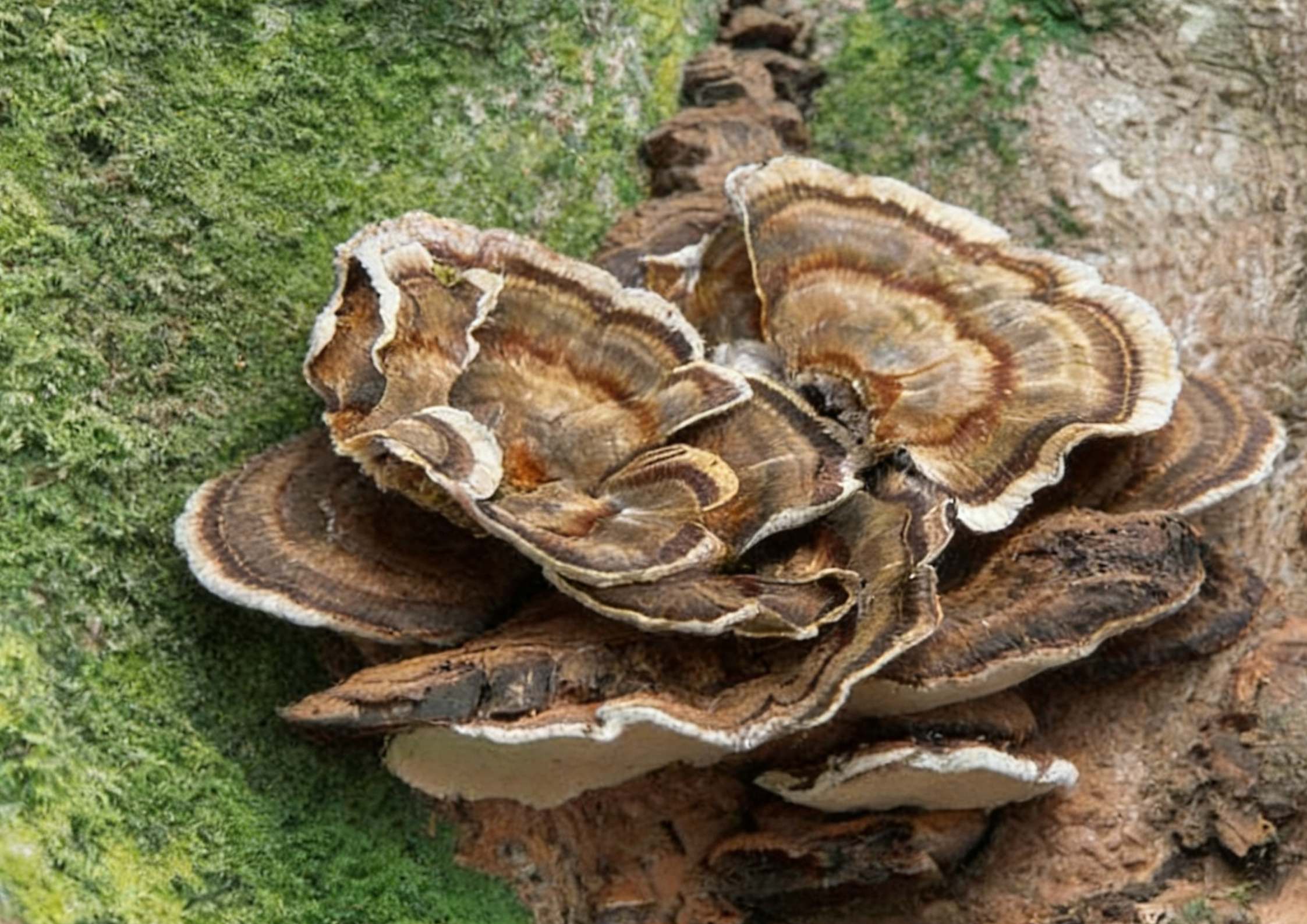
how to grow turkey tail mushrooms this guide explains what you need

Can You Grow Turkey Tail Mushrooms at Home in the UK?

Yes and it’s one of the easier medicinal species to establish outdoors.

Turkey tail mushroom UK conditions are actually ideal. Cool temperatures, steady rainfall, and abundant hardwood make outdoor log cultivation straightforward.  You don’t need a greenhouse. You don’t need sterile lab conditions. You need wood, shade, and patience.

When teaching beginners on how to grow turkey tail mushrooms, I always emphasise this: consistency beats complexity. Logs kept damp and shaded will outperform expensive indoor kits that aren’t properly maintained.

For more guidance on identification and habitat education, the British Mycological Society provides reliable growing resources on this. 

What You'll Need to Grow Turkey Tail

Understanding materials properly makes growing turkey tail mushrooms UK style much smoother. Even learning how to grow turkey tail mushrooms from scatch is a work of art.

Substrate Options: Hardwood Logs vs Sawdust
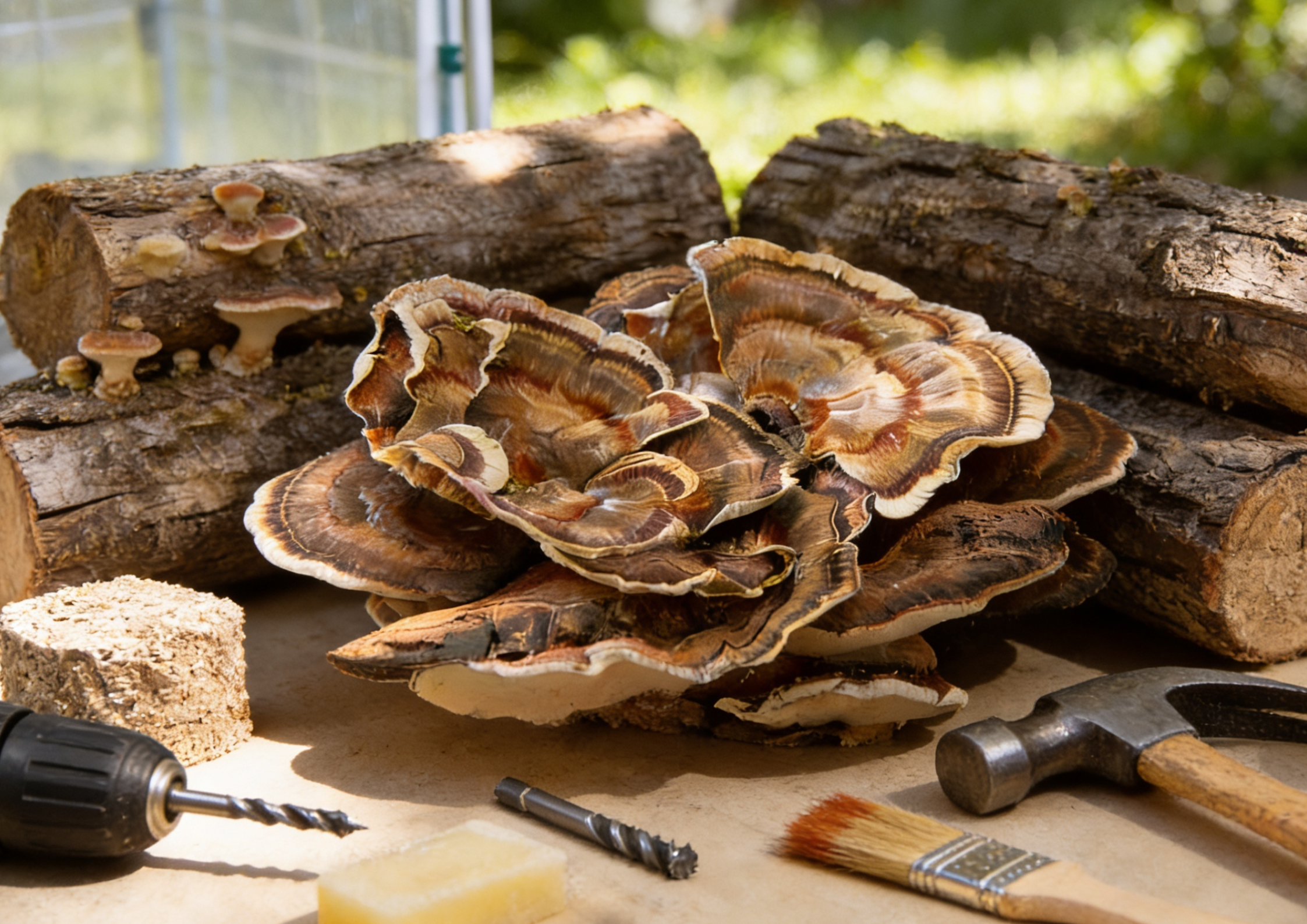
Turkey tail feeds on lignin in hardwood. Softwood will not work.


Substrate Best For  Advantages  Drawbacks 
Hardwood logs Outdoor beginners Low maintenance, long fruiting lifespan Slower colonisation
Supplemented sawdust blocks Indoor growers Faster fruiting More monitoring required

If your goal is learning how to grow turkey tail mushrooms at home with minimal equipment, logs are the most reliable route. Oak is ideal. Beech and birch are also suitable. Avoid treated timber or wood that has begun to rot.

how to grow turkey tail mushrooms this guide explains what you need

Plug Spawn vs Grain Spawn

Spawn is living mycelium used to inoculate substrate.


Spawn Type  Best Use  Ease Level 
Turkey tail plug spawn  Drilled logs  Beginner friendly 
Grain spawn  Sawdust blocks Intermediate 

For most people exploring mushroom growing UK projects outdoors, plug spawn is the simplest option. It reduces contamination risk and requires no sterile transfer.

UK suppliers such as Gourmet Mushrooms UK (gourmetmushrooms.co.uk) stock turkey tail plug spawn suitable for log cultivation.

Tools & Equipment

You’ll need:

  • Fresh hardwood logs (cut within 4-6 weeks)
  • Turkey tail plug spawn
  • Drill with 8mm bit
  • Hammer
  • Food-grade wax
  • Paintbrush
  • Shaded outdoor space

No grow tent. No humidity chamber.

Step-by-Step: Growing Turkey Tail on Logs

If you’re serious about how to grow turkey tail mushrooms successfully, follow this process exactly.

Choosing the Right Log

Select logs:

  • 8-15cm diameter
  • 80-100cm long
  • Recently cut hardwood
  • Intact bark

Let logs rest 2-3 weeks after cutting, as this enables natural antifungal compounds to settle without drying the wood. The first time I tried growing turkey tail mushrooms in UK conditions, I used an older birch log with peeling bark. The growth was weak and patchy. Fresh wood makes a real difference.

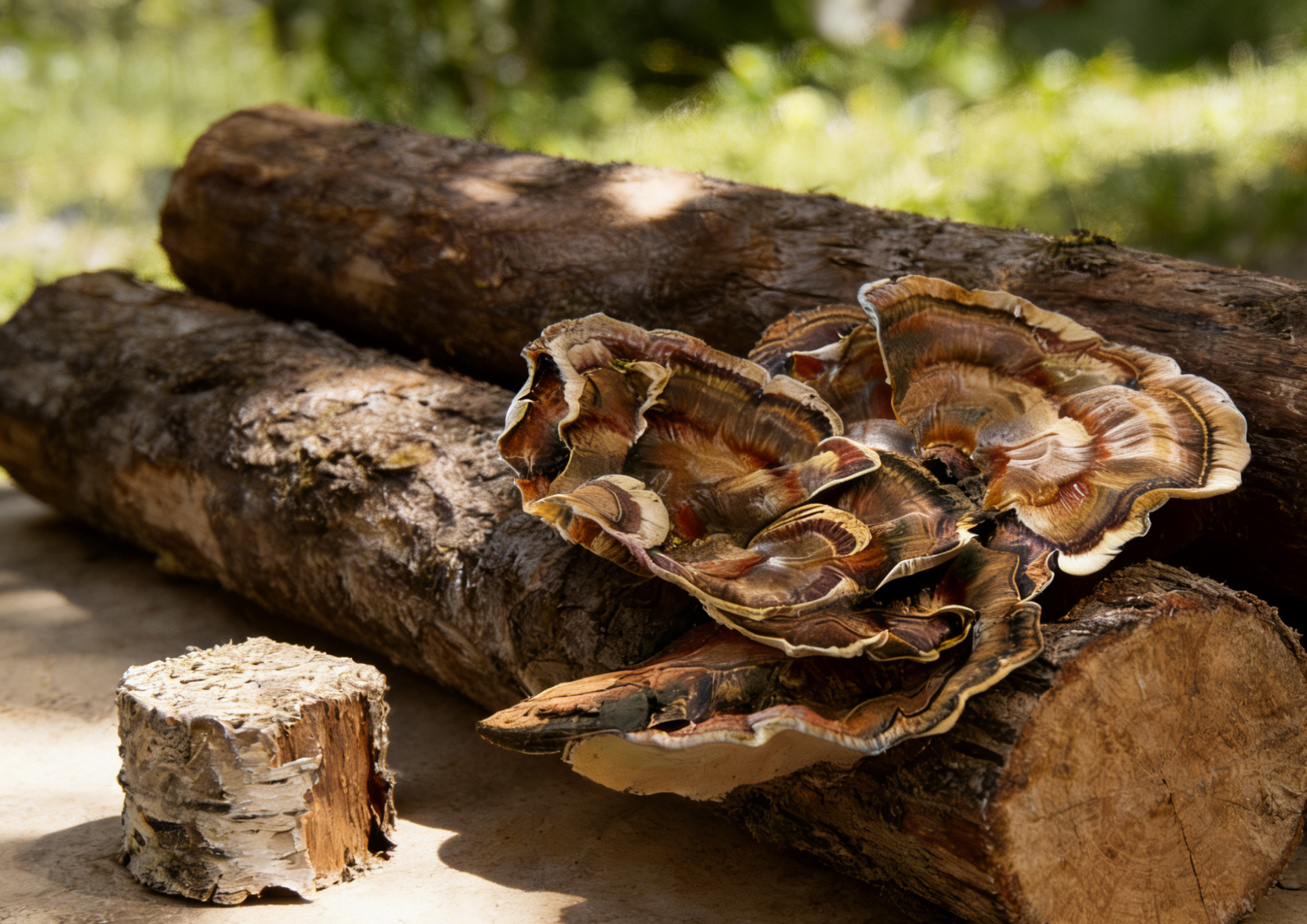
choosing the best log for turkey tail mushrooms

Inoculating with Spawn

  1. Drill holes 2-3cm deep.
  2. Space holes 10-15cm apart in staggered rows.
  3. Tap turkey tail plug spawn firmly into each hole.
  4. Seal with melted wax.
  5. Label with date and species.

When learning how to grow turkey tail mushrooms, sealing properly matters. It prevents moisture loss and limits competing fungi.

Work cleanly, but you do not need laboratory sterility.

Creating the Right Environment

Place logs:

  • In full shade
  • Slightly raised off soil
  • Sheltered from strong wind

Soak the logs in water for 12–24 hours during dry periods, as summer heat can slow colonisation. In most parts of the UK, regular rainfall provides enough moisture, but check logs during prolonged dry spells, especially in July and August and rehydrate if they feel light or dry.

Fruiting and Harvesting

Colonisation takes months. Fruiting usually occurs in autumn or spring once the log is fully colonised.

You’ll see thin, concentric, multicoloured brackets forming along bark edges.

Harvest by cutting close to the wood surface. Leave some behind to allow continued spreading.

Dry immediately in a dehydrator below 45°C for storage.

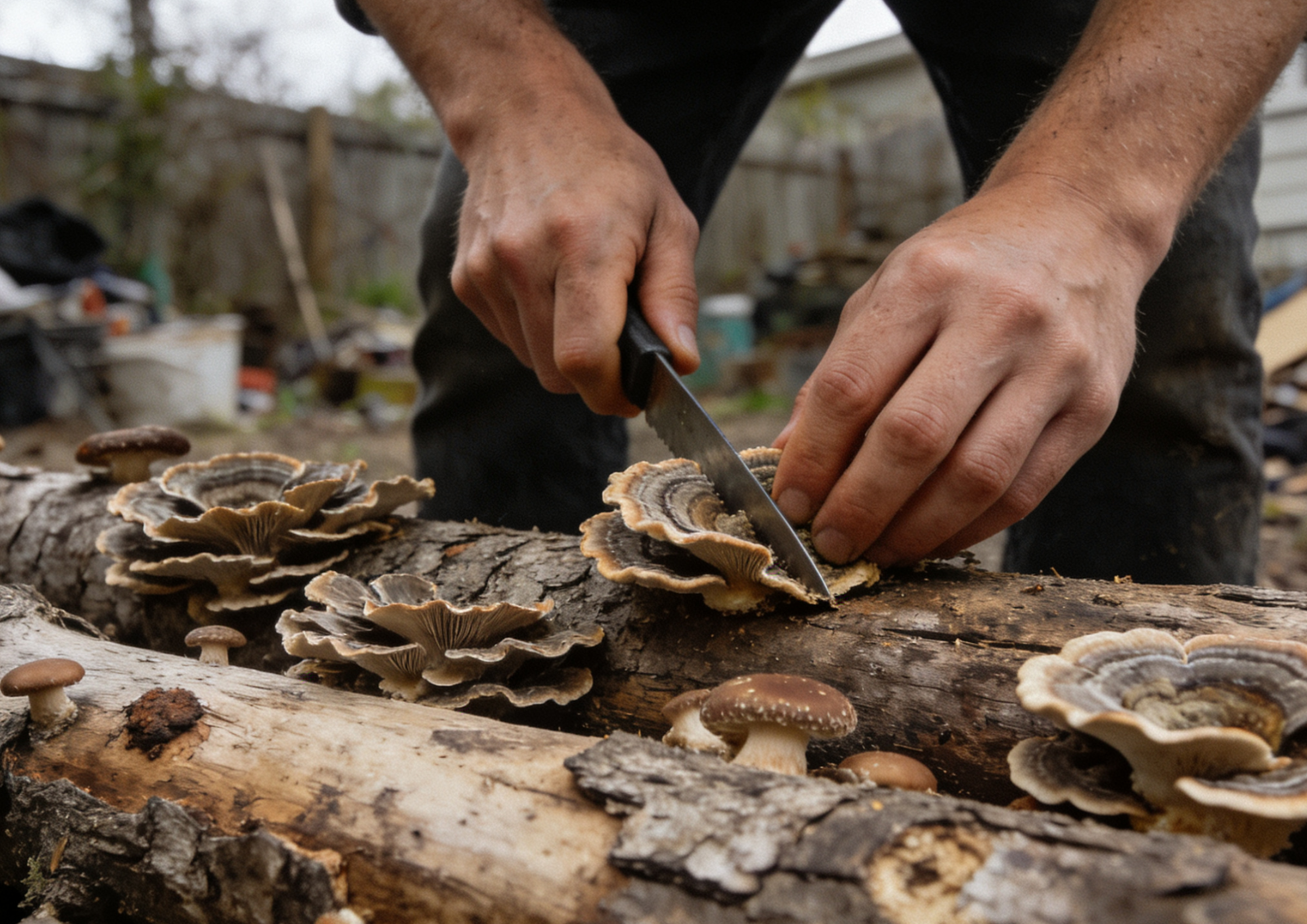
a person harvesting turkey tail mushroom

How Long Does Turkey Tail Take to Grow?

When asking how to grow turkey tail mushrooms, timing is one of the most common concerns.

On hardwood logs:

  • Colonisation: 6-12 months
  • First flush: typically autumn following inoculation
  • Productive lifespan: 2-4 years

Sawdust blocks fruit faster, often 8-12 weeks but requires controlled humidity. Outdoor log cultivation is slower but sustainable.

Common Problems & How to Fix Them

How to grow turkey tail mushrooms in UK conditions is pretty  straightforward, but issues can arise, so just be careful.

No fruiting after 12 months: Often caused by dry logs. Soak thoroughly and maintain moisture.

Green mould contamination: Usually from poor waxing or old spawn. Discard heavily infected logs.

Peeling bark: Wood too old or cut out of season. Use fresher logs next time.

Small or thin fruiting bodies: Log may be nutrient depleted. Yield often improves in the second year.

Learning how to grow turkey tail mushrooms includes accepting that nature sets the pace.

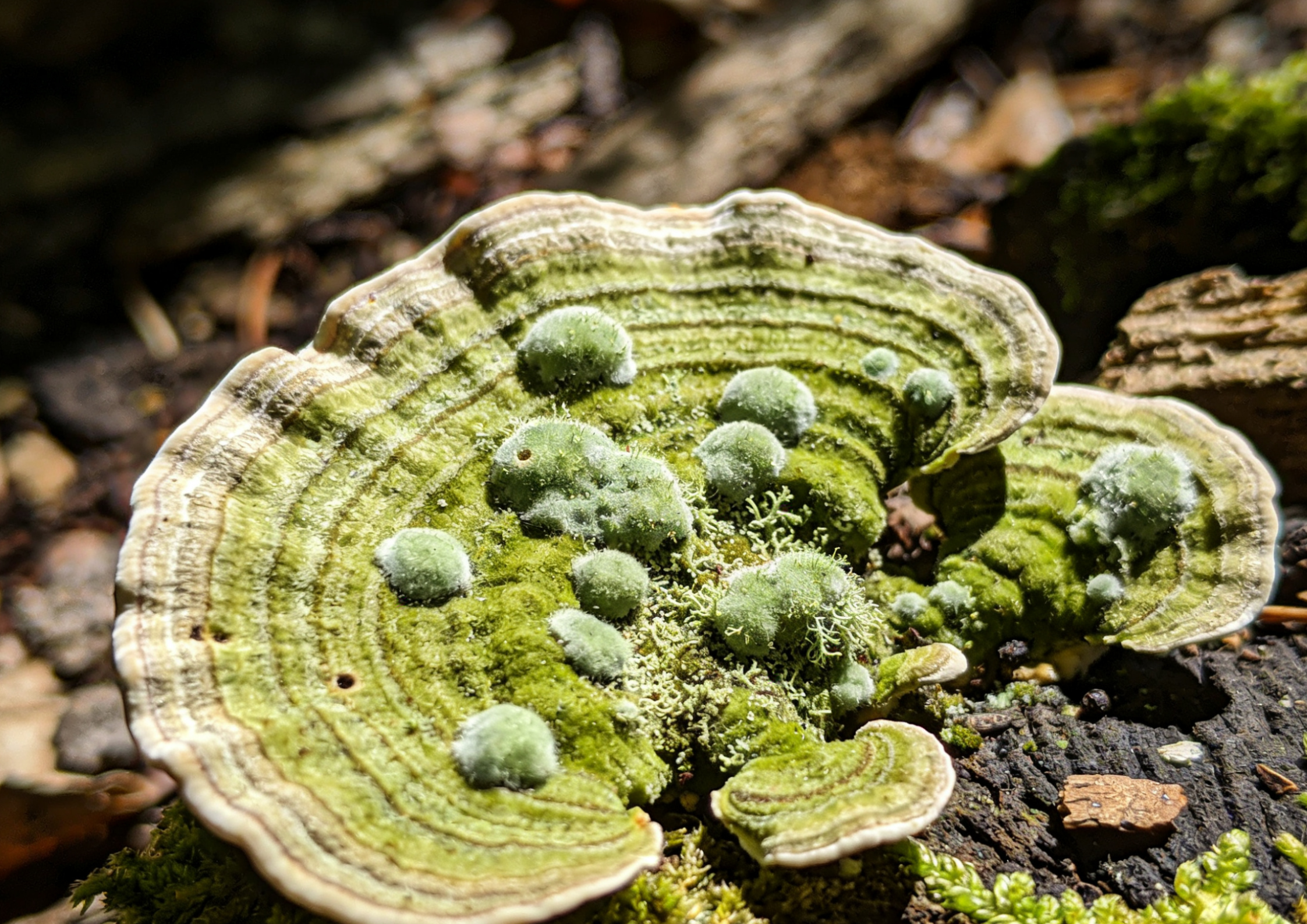
mold growing on turkey tail mushroom

Growing Turkey Tail vs Buying Supplements

People who research how to grow turkey tail are mainly inspired because they want to get the full benefits.

Research also states that turkey tail contains beta-glucans and polysaccharides. Some studies show certain standardised extracts that may support immunity alongside modern treatment.

According to a 2012 NIH study, polysaccharopeptides derived from Trametes versicolor were explored as adjunct therapies. That said, evidence depends heavily on extraction method and dosage.

Homegrown mushrooms are whole food material. Supplements are concentrated extracts.


Factor Growing Your Own Capsules
Upfront cost Low Moderate
Time required High None
Extract standardisation No  Yes 
Convenience Seasonal Daily use


In practice, when working with clients over 8 weeks using encapsulated extracts, consistency improved because dosage was standardised. Growing turkey tail mushrooms UK-style is deeply rewarding but not precise for therapeutic intake.

Many people enjoy growing for connection to food and nature, while using supplements for consistency. You can also read our guide on the benefits of turkey tail for dogs to see how it helps them.

How to grow turkey tail mushrooms at home gives you a low-cost way to cultivate a resilient woodland fungus at home. The UK climate is excellent for it. The equipment is simple and the process rewards patience.

If you enjoy hands-on projects and long-term harvests, then growing turkey tail mushrooms in true UK style is deeply satisfying.

If you prefer consistency and convenience, supplements may suit you better.

a happy man holding a glass of water

FAQs

Is it easy to grow turkey tail mushrooms at home?

Yes, turkey tail is perfect for the UK climate. Using hardwood logs and turkey tail plug spawn, beginners can easily succeed with minimal equipment. The main requirement is patience, as colonisation takes several months before fruiting begins.

What wood is best for growing turkey tail?

The best has to be oak.Beech and birch also work well, but try to avoid softwoods like pine. Never use treated timber, as chemicals can inhibit mycelial growth.

How long does it take turkey tail mushrooms to grow?

On hardwood logs, turkey tail takes 6-12 months to fruit. Sawdust blocks may produce within 2-3 months under controlled indoor conditions. Outdoor logs can continue producing for several years once established.

Where can I buy turkey tail plug spawn in the UK?

Specialist suppliers such as Gourmet Mushrooms UK (gourmetmushrooms.co.uk) sell turkey tail plug spawn suitable for outdoor log cultivation. Always choose fresh spawn from a reputable UK supplier to reduce contamination risk.

Is it worth growing turkey tail vs buying a supplement?

Growing turkey tail offers long-term value and connection to the process. However, supplements provide standardised extracts and convenience. If consistent dosage matters, capsules may be more practical, while growing suits hobbyists and gardeners.

⚠️ Medical Disclaimer

This content is for informational purposes only and does not constitute medical advice. Always consult a qualified healthcare professional before starting any supplement.

SH
Dr. Sarah Holloway

RNutr · MSc Clinical Nutrition · University of Surrey

Sarah is a UK Registered Nutritionist with a specialisation in functional foods and botanical supplements. She has reviewed clinical trial evidence for Nture since 2024 and focuses on ensuring all dosage and health claims made on this site are directly supported by published peer-reviewed research.

Continue Reading

Related Guides

Leave a Reply

Your email address will not be published. Required fields are marked *